
As an anxious person myself, and a parent of a child who worries about different things, I know what it can feel like when your kids anxiety flares. You may feel overwhelmed. You want your child to feel good, and you want the anxiety problem solved. You try different things, such as reassuring, encouraging them to move on, or even demanding that they stop doing what they are doing when they are anxious.
Your attempts make complete sense given your desire to solve the anxiety problem, but let’s admit – they don’t work very well. Reassurance leads to more reassurance, asking to move on leads to your child either shutting down or feeling more anxious, and demands likely make them feel frustrated on top of feeling anxious. And even if some of your responses work for a short time, the problem persists in the long term – your child becomes anxious again and again. What can you do to help your kids anxiety?
Of course, you want your child to be able to do what other kids do without much difficulty and overthinking, for example, making new friends, raising their hand in class, seeing a doctor, trying different activities, and flying on a plane. However, these experiences (some or all of them, depending on what your child’s anxiety latches onto) can become extremely difficult for an anxious child.
An anxious child might avoid raising their hand in class, refuse to go to the doctor’s office, get very quiet at school (even if at home they act the opposite), and have a complete meltdown on the flight. Kids who have anxiety avoid experiences, people, places, and tasks that bring anxiety. And that makes complete sense – anxiety is so painful! Who wants to have their heart beat fast, their hands shake and get sweaty, and their stomach act weird?
Anxiety causes various uncomfortable physiological symptoms, including stomach aches, poor sleep, headaches, and more. So, it’s no surprise that your child is trying to avoid things that cause these symptoms and sensations – they don’t want their body to act weird, they don’t want uncomfortable feelings, they don’t want racing thoughts, and they don’t want to feel out of control.
However, anxiety is just the brain overestimating the threat and underestimating the child’s ability to handle the task or situation at hand. While the child’s brain is trying to keep them safe, in those situations, its response is exaggerated – the child doesn’t need to be ‘saved’, after all, those ‘dangers’ are not real dangers.
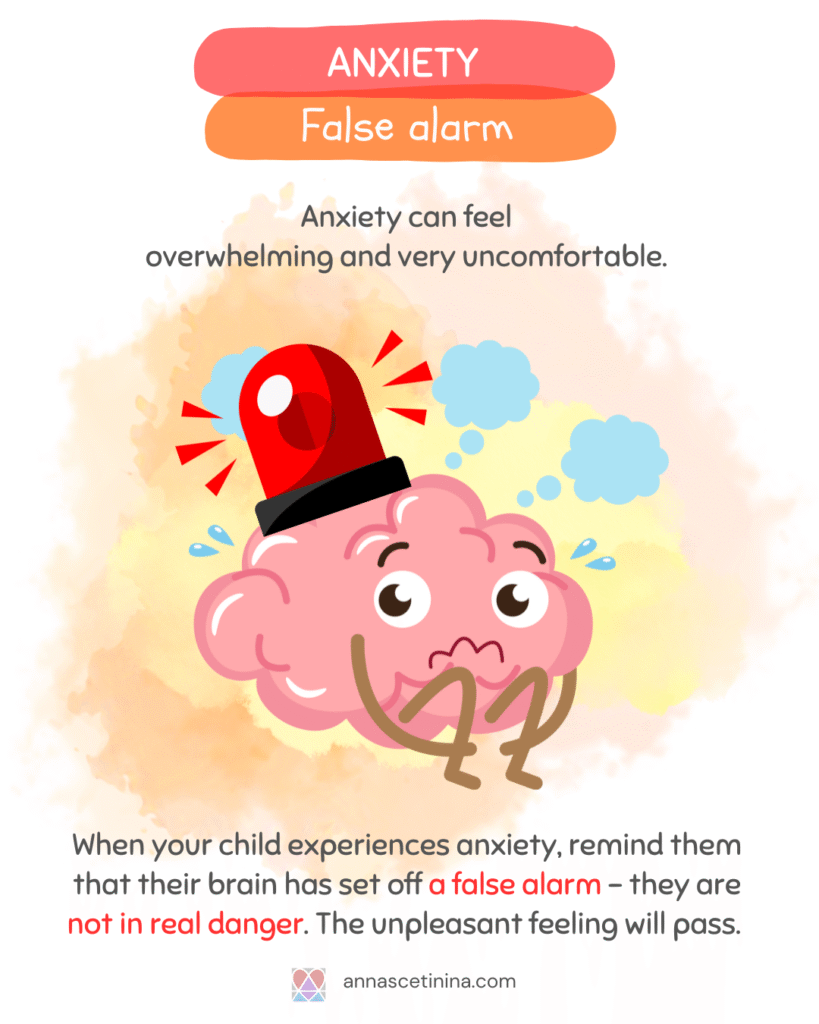
The good news is that there are many ways to help kids anxiety better and help them not avoid meaningful and important experiences and tasks.
Respond With Self-Compassion
Do you know how common anxiety is in youth? It affects approximately 1 in 12 children and 1 in 4 adolescents [1]. Consider that this data is based on reported cases; however, many parents don’t seek help for their kids anxiety, so anxiety concerns are much more common than what we see in statistical information. The rate of mental health concerns in Canadian children continue to mount [2], and anxiety is the most prevalent mental health concern affecting Canadian kids and teens [1,3].
So, you are not alone. And let’s be honest – it’s hard when your child has anxiety. Let me repeat. IT’S HARD. You may sometimes feel powerless, overwhelmed by your child’s reactions, scared, frustrated, exhausted, and even hopeless. Please remind yourself that it is not your fault they have anxiety, and it is not your job to eliminate it. Your child does not need to be ‘fixed’. Your role is to provide effective support and be aware of and take advantage of the options available to you to better support them in coping with their anxiety. Acknowledge that it will take time for your child to learn how to deal with their anxiety. Acknowledge that there is no quick and easy solution. Be kind to yourself and keep looking for what works best for your child and yourself.
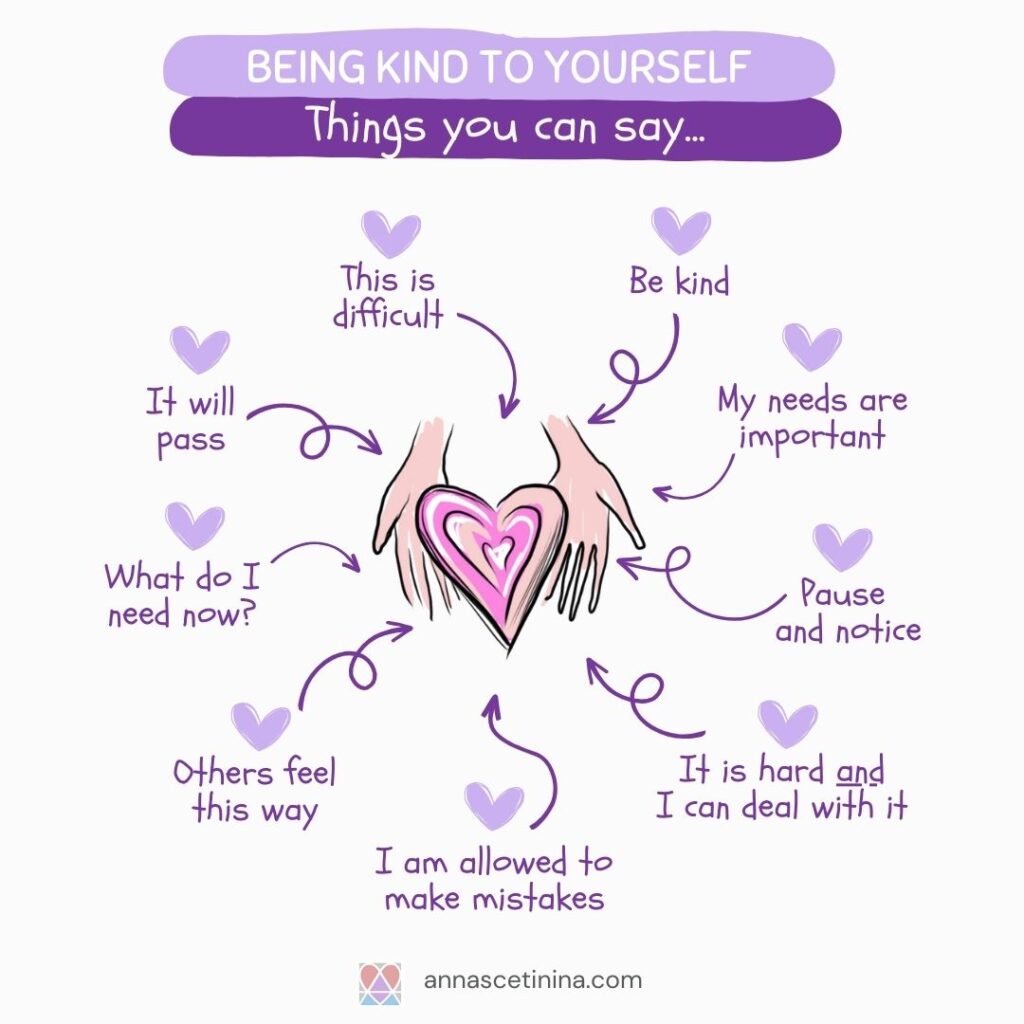
Here are some kind things you can say to yourself as you navigate the situation:
– This is hard. Can I be kind to myself.
– It’s not easy, and I am allowed to make mistakes.
– My needs are important. What do I need right now?
– How do I feel right now? This feeling makes sense because the situation is difficult.
– I care a lot, and it’s important for me to help my child learn how to cope with anxiety.
– Be patient. Change takes time.
– This moment will pass, be kind.
What Parents Can Do at Home to Support an Anxious Child
1. Validate
I can’t emphasise enough how important it is to validate feelings when your child is anxious. Here are some things you can compassionately say when you see them struggling with their anxiety (fill the blanks with your child’s anxiety-inducing task):
– It seems so hard for you to do ______.
– I notice ______is bringing anxiety.
– It seems like ______worries you a lot.
– Looks like you’re scared of ______
– Does ______bring a lot of anxiety?
2. Normalise
Normalise their feelings and give examples of how you deal/dealt with anxiety-inducing situations, and remind them how they successfully dealt with something difficult in the past, even if it was not necessarily anxiety-related. Here are some ways to normalise:
– It’s okay to feel the way you feel when we talk about ______.
– When you are scared, it makes sense that you want to ______(e.g., avoid, cry, curl into a ball, seek reassurance, scream, etc.).
– Everybody feels this way sometimes.
– It’s okay that some things cause uncomfortable feelings.
– Some people worry about some things; others worry about other things. Anxiety is normal.
– I remember when I was ______years old, I was scared to ______, but I did it and felt very proud of myself after.
– Member, last time you did rock climbing? It was something difficult, and you did it anyway! We often feel one way but act in a different way. Can you think of another example?
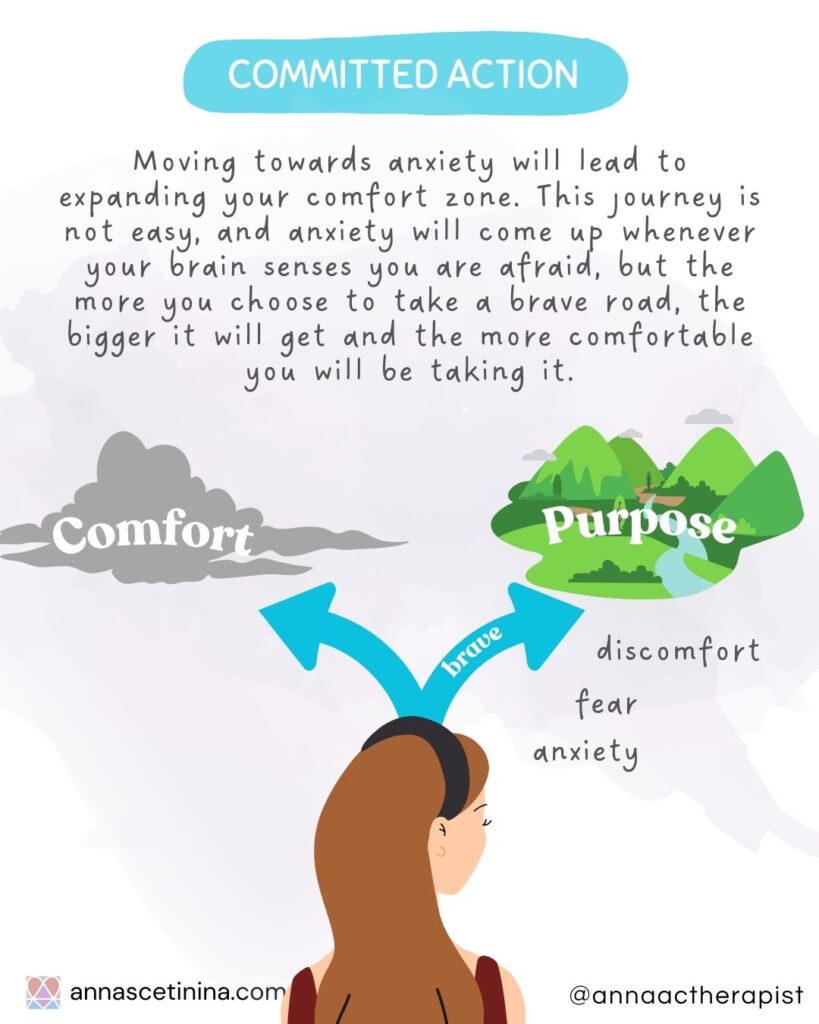
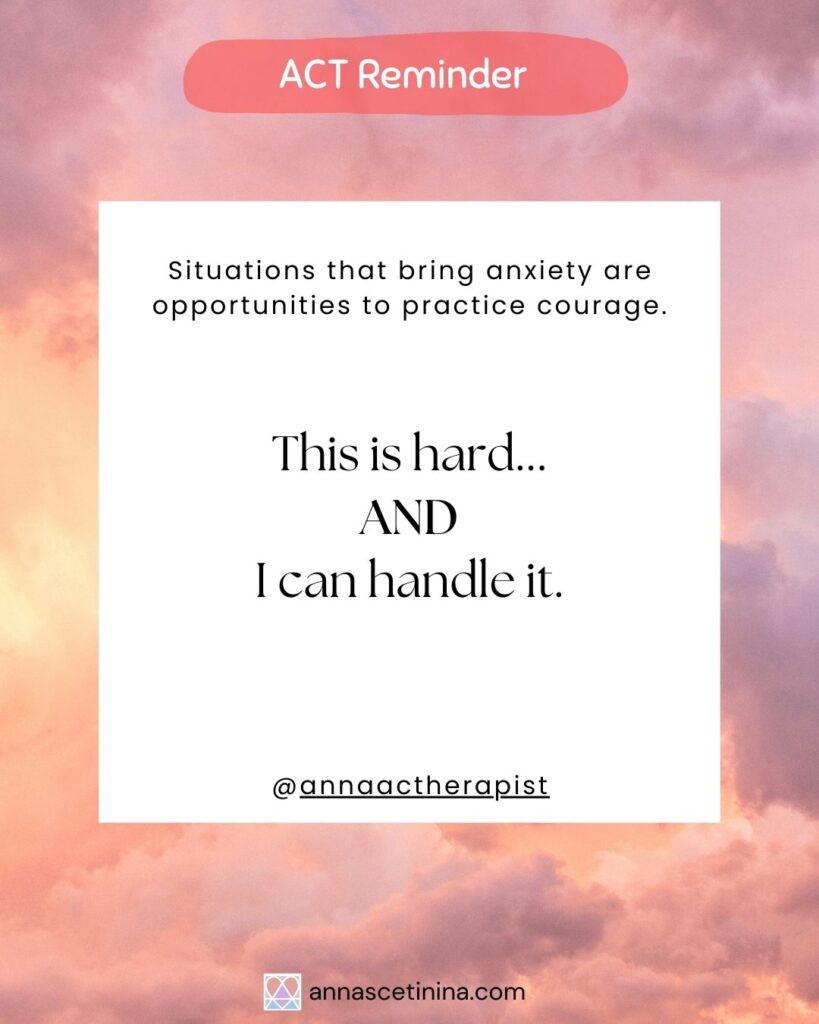
3. Encourage your child to reduce avoidance and move TOWARDS the feared thing
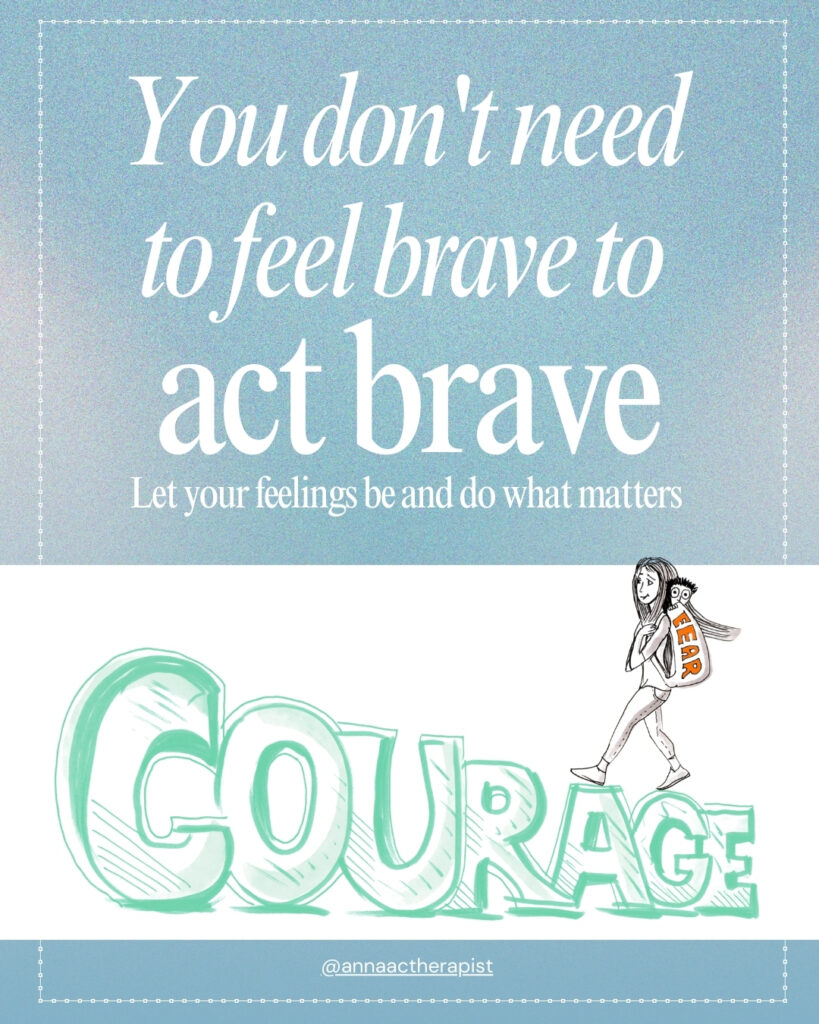
Steps one and two above help your child set the right mindset and prepare for the main move – facing their fears and reducing their avoidance. Your child does not need to (and can’t, as you already know from your experience) do it at once, so your role is to encourage small steps towards facing anxiety and dealing with unknowns effectively. Here are some ideas of how you can encourage your kid to act bravely:
– When you are scared, it’s your brain protecting you from discomfort, from trying something you don’t think you can do. But your brain tends to overprotect you. Although it’s hard, you can do it.
– It’s hard, and I am sure you can do it. Let’s brainstorm together our first step in conquering your fear.
– I know how brave you are. Let’s think about what you can do to take your first step.
– Can you think of something you are willing to do even though you are scared?
– If you learn not to move towards things that make you anxious, taking small steps, the fear will lose its power, and you will feel strong and brave! It’s as if you took your power back from your fear!
4. Reward
Brainstorm how your child’s brave behaviour will be rewarded. Be specific about what and when they will get for acting bravely. Here are some things you can say:
– If you do ______, how do you want to celebrate being brave? We can ______ (e.g.: play game, have ice cream, go on a hike, do pillow fight, etc.) on ______(day/date).
– Let’s collect brave points! Each time you do ______, you get ______ points! When you earn a total of ______ points, we can do ______ (think of the experience that both you and your child would enjoy).
– Being brave is rewarding on its own, and we can add a reward to help you take your brave steps!
Reward ideas: stickers, a small toy, ice cream, a pillow fight, staying up late, choosing a family game to play or a family activity, and more.

5. Reinforce
You reinforce your child’s brave action by saying:
– I keep thinking of how you did ______. You were so scared, and you did it anyway. I’m so proud of you, and I’m sure you must be very proud of yourself!
Therapy for Anxiety
Help from a therapist who specialises in treating kids anxiety can be life-changing. It is not easy to reach out for help, and kids (and their parents) are unsure what to expect and what the therapy process entails. Stay open-minded – it’s okay to take a couple of sessions to decide if this therapist is the right fit for your child. Learn in advance about the approach the therapist will be using and ensure it is an evidence-based approach for the treatment of anxiety, such as Acceptance and Commitment Therapy (ACT) and Cognitive Behavioral Therapy (CBT), which have been proven effective to help kids deal with their anxiety effectively. Therapy for anxiety involves both cognitive flexibility work (the therapist will teach your child mindfulness, acceptance, and cognitive defusion skills) and behavioural changes (setting small and doable exposure goals to move towards the fear and reduce avoidance and so-called safety behaviours used in the anxiety-inducing situations.
It’s normal that you will want to be part of the recovery process while at the same time giving your child space to work with a therapist one-on-one. Ask your child’s therapist how you will be updated/informed on the child’s progress and challenges, and how you will be involved. It is essential that the therapist plans the treatment with you, including how to increase support and reduce accommodations, discusses the exposure work and exposure goals, and collaboratively plans how the child’s progress will be tracked and rewarded.
Self-Help Resources
An online program, an anxiety workbook for kids, and other self-help resources are easily accessible and inexpensive options worth exploring for navigating kids anxiety. Join your child’s journey of learning what anxiety is and practicing strategies and tools to cope with it. Not only will it help them to have your support, but you will benefit from it. For example, A Workbook for Kids Who Worry is an anxiety workbook that is packed with fun ACT-based activities that parents can do alongside their child, helping them develop a flexible mindset to tackle anxiety with acceptance, compassion, playfulness, and mindfulness, and do things they want to be doing despite big, unpleasant feelings being present.
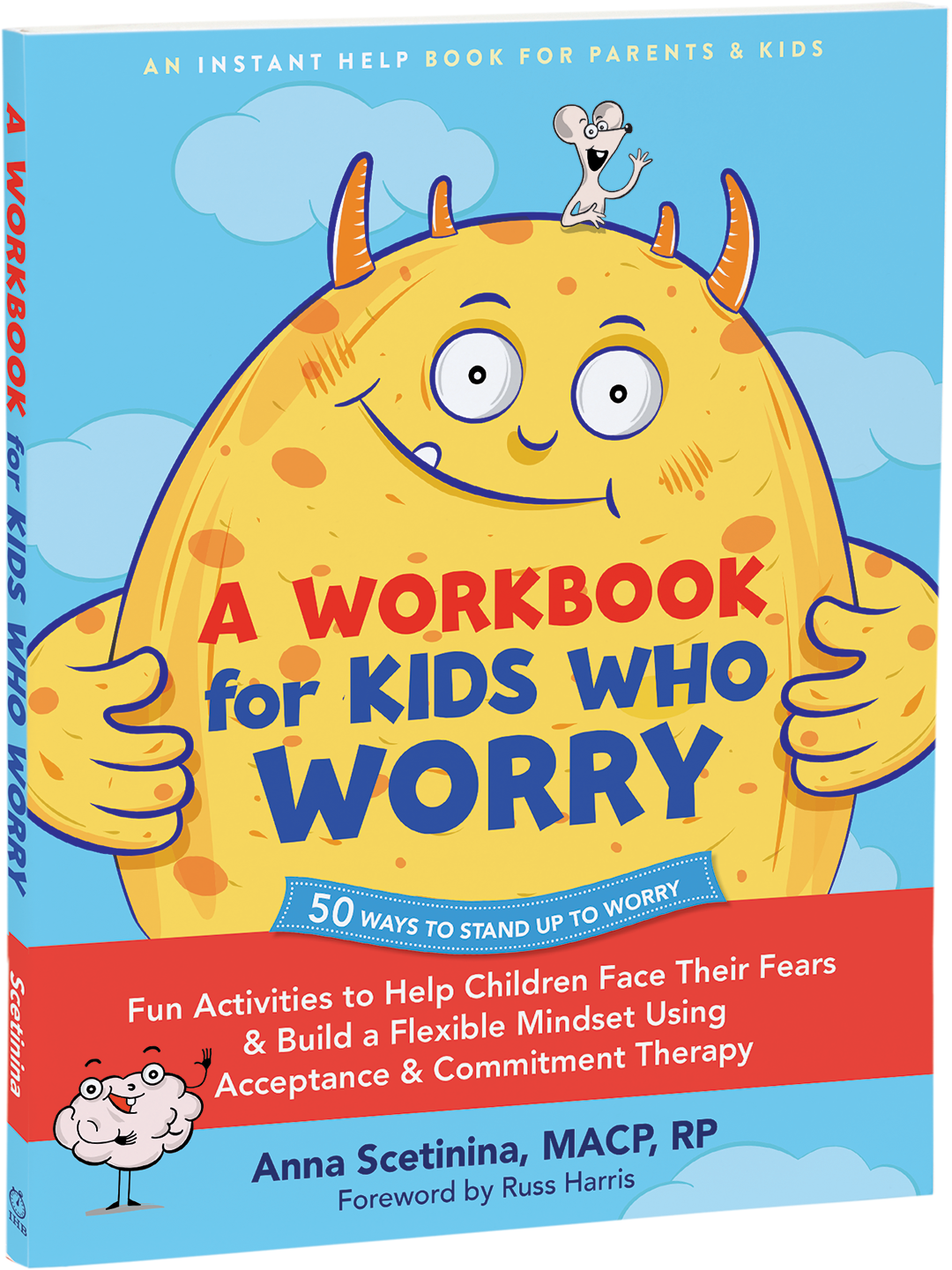
Free tools for this book, such as audio practices and downloadable work pages are available at the publisher’s website. Log into your NewHarbinger.com account (or create an account if you don’t have one – it’s free!) to view or download the accompanying files.
Medication for Anxiety
It is very useful to discuss your concerns about your child’s anxiety with their doctor, especially when their anxiety is severe and impacts everyday functioning, including their ability to study, do sports activities, interact with peers, eat, and sleep. Their doctor will be able to advise if medication for anxiety could be a beneficial for your child. However, remember that it is behavioral changes (facing fears, developing a flexible mindset, learning coping skills) that will help your child overcome their anxiety and develop fundamental skills for dealing with stress, difficult emotions, and challenges in the long term.
With the right support and practice, your child can learn skills that will benefit them for life in managing their anxiety.
– Anna Scetinina, July 26, 2025
Want to better understand your child’s anxiety symptoms? Read about Social Anxiety in kids and Generalised Anxiety Disorder in kids.
Read more about anxiety workbook for kids A Workbook for Kids Who Worry
Your Anxious Child Podcast. Helping Anxious Child with Acceptance and Commitment Therapy: Interview with Anna Scetinina, MACP, RP
References
(1) Liu, X., Yang, F., Huang, N., Zhang, S., & Guo, J. (2024). Thirty-year trends of anxiety disorders among adolescents based on the 2019 Global Burden of Disease Study. General psychiatry, 37(2), e101288. https://doi.org/10.1136/gpsych-2023-101288
(2) Government of Canada, Statistics Canada. (2024, September 10). Canadian Health Survey on Children and Youth — Changes in the mental health of respondents from the 2019 survey. Statistics Canada’s official release bulletin. https://www150.statcan.gc.ca/n1/dai-quo/index-eng.htm
(3) CIHI. (2025, May 1). Overall trends for Child and Youth Mental Health. CIHI. https://www.cihi.ca/en/child-and-youth-mental-health/overall-trends-for-child-and-youth-mental-health